Saturday, August 10, 2013

The Hitchhiker’s Guide to Mozambique: Chapas, Boleias, and Other Alternatives to Teletransportation

As many of you know, I frequently occupy myself by pondering the possibilities and philosophical dilemmas of teletransportation. But until it is resolved, invented, tested, and reliable, I need to find other ways of getting around. Here are some options I have in this country:

Chapa: imagine a mini-van. Now imagine that the bucket seats have been replaced with a 5 rows of bench seats. Now stuff 29.8 people inside, don’t worry about their level of comfort, and just when you thought there was no room even for a chicken, it stops to pick up another three human beings.

Boleia: Getting a “ride.” Basically just hitch-hiking, but one of the most comfortable, fastest, and cheapest ways to travel. You won’t have anyone’s armpit in your face or baby on your lap – you might even have your own seat – they don’t stop every 3 minutes to pick someone up, and sometimes they don’t charge you. And you meet interesting people. It’s a win-win-win-win-win situation.
The boleia dance, patented by Mac and Ariel (front 2 volunteers)
Open-back pick-up truck: A mix between a boleia and a chapa. Similar to a chapa in that you have to pay, similar to a boleia in that there is no official system for deciding where they are going to go and what time one will pass by. The advantage over a chapa is that you have fresh air blowing in your face, instead of stale air that someone has breathed out.


Bicicleta: Luckily, the chain on my bike broke within the first kilometer of riding it home from the store where I bought it, and not in the 5th or 14th kilometer. There are no gears on these bikes; just you and your leg muscles straining to carry you and how ever many other people you are carrying on the back or handlebars up the hill. They sometimes have brakes.


Passear: verb, to go for a walk; meander. The passear pace is one that you may have never experienced if you grew up in the United States. You are moving forward – but only just barely. For a true passear, hesitate slightly before putting each foot down. If you feel like you’re moving in slow motion, or perhaps even backwards, and you lose your balance because you’re moving so slowly, then you’re doing it right. Once every couple minutes, pause to look at the scenery.


Saturday, August 3, 2013

Guest Post: A Visit to Mozambique!

Hello! This is Steph’s blog here, featuring Nooreen Meghani, world traveler! If this was a music video played on one of the big busses that you can take long distances (eg. Nampula – Ocua/Pemba: 5/7 hours) I would rap and you would stand in the personal space of three other people for an uncomfortable amount of time. Luckily that is not the case. I am tired of sharing my personal space!

I arrived in Mozambique on July 18th, one day later than planned, but no less enthusiastic. I wanted to see first-hand what Steph is doing here, and visit a part of the world I might not otherwise, especially while there’s someone here to put up with me (read: translate).

When I got here, I was excited to participate in all of Steph’s household chores (don’t tell my parents!). Little did I know the work she would put me to!

Every day we were in Nauela we went at least once to the well for water. When I got tired of pumping a small child would take pity on me and take over. Then, I had to carry five whole gallons of water on my head! Once, I forgot my towel, which I used as a capulana, and I carried the bucket on my head without it. I think the dents are permanent.


And! Whenever we wanted to cook (anywhere from 1-3 times a day) I had to get my hands all dirty with charcoal. People here argue about whose turn it is to touch the charcoal! I made a friend just by filling his fogao with charcoal.


Forget the charcoal – one day we went to check out the progress at the library, and we made bricks! That involves stomping barefoot in mud, picking up mud with your hands, and digging in the clay and pouring water and sometimes putting a mudprint on your best friend’s face. Oops.

Luckily, laundry only takes about 4 hours, so if you happen to end up covered in mud you’re only a morning and a few trips to the well (wash your capulana LAST) from cleanliness – sort of. Turns out hands (at least mine) aren’t as effective as washing machines. There are many people in Nauela with at least one article of pure white clothing. I don’t know how they do it. Coming right off of field camp where you’re kind of expected to be dirty probably gave the impression that I’m a slob. I guess it isn’t too far from the truth!

Speaking of field camp – Mozambique has some awesome rocks! Pretty metamorphosed and weathered granite/granodiorite I think. The soil is very clay-rich, which allows for good/easy brick making. Most buildings in Nauela and similar towns are made of bricks, for which the clay is dug right where the building is going to be. (See Steph’s soon-to-be-posted post on brick making!)

Anyway, I digress. I can’t keep up the complaining tone though - I loved every moment of my visit, even waiting for transportation in the rain!

From Nauela we went to visit another PCV, Lona, in Ocua. At Lona’s site we enjoyed the luxury of the school’s generator and watched New Girl almost every night (and some mornings with breakfast and tea!). Lona’s school has a working generator, so she can charge her computer when it’s running! When we weren’t watching New Girl or cooking or just hanging out, we went for walks by the river, ate bean burgers, and drew on her walls. I say this for Lona and all of the people I will talk about in this post: It is wonderful to know that Steph has such good friends in her life.

We went back to Nauala for a day and saw a few of Steph’s colleagues who were still in town (it’s vacation, so many were away) and got some water (of course), drank some hot cocoa, and the next day we went to Gurue! The Cha/Tea Capital of Mozambique!!

Oh. My. Gosh. Cha Gurue is so good. I won’t tell you how many pounds I’m bringing back, but it will keep me in tea for some time. The tea fields are beautiful, and the tea trees are actually teak. Eucalyptus grows everywhere to suck up the constant rain and allow other crops to grow, and people have to dig out their houses regularly because there is so much water that the hills move.

We stayed for a few lovely days with Invinha’s PCV, Amanda, and her brother Steve, who was also visiting. With them, we hiked up through the tea fields (which cover the feet of Gurue’s mountains) to a beautiful waterfall! It was a long hike, and when we got back to town we stopped in a shop and treated ourselves to fresh shamoosas (aka samosas)! Yum!


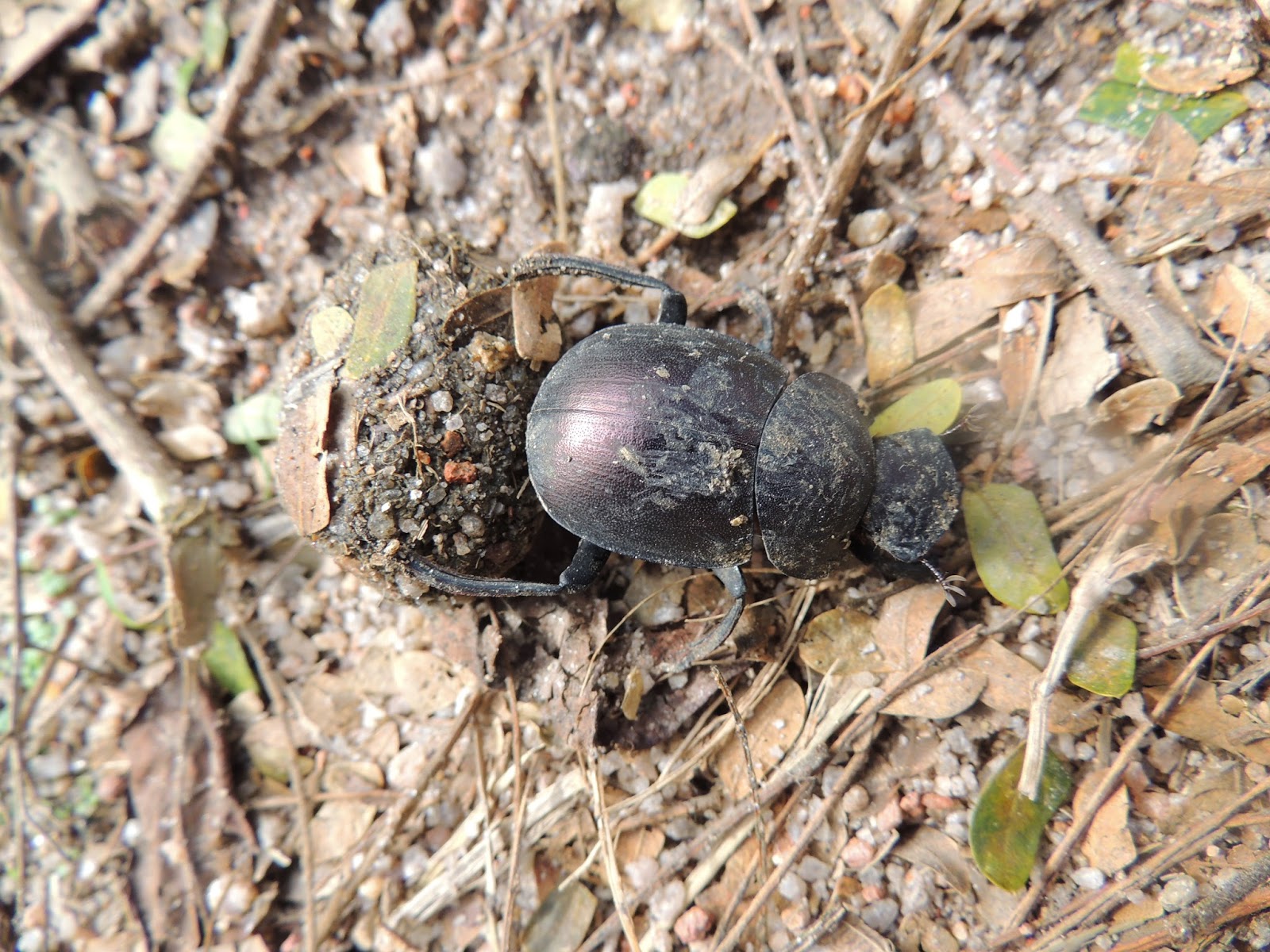
ALSO WE SAW A DUNG BEETLE


While we were in Invinha, Steve and I both killed a chicken each. I think the middle picture aptly describes how I feel about it. In Mozambique it’s an honor to eat the chicken head, so… yup. I ate it. When I looked at the pictures and sniffled a bit, Steph said “don’t cry, we left them in Ile or Nampevo.” Hahaha! True.

urp.

Moving on! I also celebrated my birthday while in Invinha, and, to my vast surprise, Steph baked me a cake! And two visitors, Ruben and Justina, brought me a capulana for my birthday!! It was incredibly lovely.

Ahhh! 

L-R Steve, Amanda, Ruben, Justina, Nooreen, Steph
CAKE
From Gurue/Invinha we headed to Nampevo to see Steph’s friend Belito and to get the full Mozambican experience. We rode on the outside edge (legs inside) of an open-back truck most of the way, and then in Ile (where the truck dropped us off) we ran into an ambulance driver who recognized Steph (he drives through Nauela regularly) who took us the rest of the way!

Fight!
Belito has a 10’x10’ room with a concrete floor. He sleeps on a straw mat with one blanket, and he is probably the happiest most energetic person I’ve ever met. It was an eye opening stay. It makes me think about all of the people here with his potential and drive and no outlet. I think Mozambique is making strides on its own, but I’m glad Peace Corps (and Steph) is here to encourage and support, and perhaps speed up the process of getting Mozambique’s people the options for their futures they want, need, and deserve.

Tonight, we’re in Nampula, ready for my flight out tomorrow. I will be sad to leave Steph and my new friends. That doesn’t begin to describe how I feel, but you get it!

I’ll leave you with a few memorable quotes by Steph from my time here. She will need some help re-learning English when she gets back. She’s so well immersed in Portuguese that she literally speaks it in her sleep!

This is not a pose.
“I’m going to paint this over in pen”
“It’s just something work.” “Busywork?” “Yeah!”
“Oh, I didn’t write down the – what’s the thing with five numbers called?” (zip code)
“I got ash everywhere and I was going to sweep it up, but it’s still winding” (it was windy)
“Amanda, was it you I was talking about with (Portuguese word)?”
“What’s the opposite of fine salt? Thick grained?”
“It’s texturized!”

And one more from me:
"It was physically difficult to saw through her neck" (Poor Gertrude, my chicken)


Steph looking like an old man/Voldermort

The One You’ve All Been Waiting For: HOW TO MAKE A CORNMEAL MUSH PATTY!


It’s called xima (pronounced “shee-mah”) and it’s the entire country’s lunch, dinner, and sometimes breakfast.  It’s a ball of cooked cornflour and water. It’s the texture of grits, and the viscosity of leftover oatmeal. If you don’t learn to like it, you will not survive, and you definitely will not be Mozambican. I can just hear your stomachs grumbling and your mouths watering.

Xima is the ideal stomach filler. It’s like the color black – you can wear it with anything, except some shades of brown and navy blue (likewise, chocolate xima is not tasty, nor xima with blueberry jam or blue airheads). Xima doesn’t have much flavor, so it goes with beans, fish, chicken, tomatoes, leaves – all the flavorful foods that exist here. The sole purpose of its existence is to make the barriga feel full, and indeed, I just ate 2 balls of xima (with tomatoes) and now it feels like there are rocks in my stomach.

Xima does its job to squelch hunger pangs, but when it’s 94% of your diet, it lacks in nutrition. It’s just cornflour and water, and it’s the bulk of every meal. The remainder is a couple bites of chicken, or a spoonful of cooked leaves (leafy greens, not oak tree leaves), or beans. Lots of starch, few veggies and protein. I think that’s why I feel hungry all the time but still managed to gain the Africa 15.

So, in case you ever want to try this at home:

Cornmeal Mush Patties

Preparation time: 6 months

1. Plant a cornfield


2. Pick and shuck corn


3. Pop kernels off cobs

4. Pound kernels using a pilão (a giant mortar and pestle, as tall as I am) to remove shells


5. Grind pounded kernels at the mill to make cornflour, then spread flour out to dry


6. Boil water with a little bit of cornflour, for about 10 minutes


7. Put in a more handfuls of cornflour until thick, stir vigorously with a wooden stick for another 10 minutes


8. Serve into balls/patties using a special spoon called a concha, that makes them all nice and smooth and round

9. Eat with hands: break off a chunk, roll it into a ball and use it to scoop up food


10. Feel disgustingly full

11. Be hungry again 2 hours later, and eat the leftovers you meant to save for breakfast


Bom apetite!

Tuesday, July 23, 2013

Ask Estefania – an Advice Column for American Females Living and Working in Rural Mozambique

Dear Estefania,
I exercise every day, don’t snack between meals, rarely eat sweets, and still gained fifteen pounds. Sometimes people walk up to me and say, “wow, you have gotten so fat!” What should I do?
~Promising Paunch

Dear Promising Paunch,
If people tell you it looks good, just go with it.
~Estefania


Dear Estafania,
I thought I was making a friend, but it turns out they just wanted to ask for my groceries.
Moody Market-Goer

Dear Moody Market-Goer,
There are seven billion people in the world. Make another friend.
~Estefania


Dear Estefania,
Many people have proposed to me. How can I tell if it’s true love?
~Starry-Eyed

Dear Starry-Eyed,
By the number of minutes they have know you, and whether they use the words “American” or “white” in the proposal.
~Estefania


Dear Estefania,
It takes hours to hand-wash clothes, and by the time I’m finished, my back is aching and the skin on my fingers is scraped off.
~Knuckles Rubbed Raw

Dear Knuckles Rubbed Raw,
Stop complaining and suck it up. What do you think people did before washing machines?
~Estefania


Dear Estefania,
The toilet needs a lot of water to flush, and I have to carry all my water from the pump. What is it that I do do?
~Compressed Neck

Dear Compressed Neck,
Dig a pit latrine! Your thighs will get a workout from all the squatting, you can take moonlit strolls for fresh air and to see the stars if you have to pee in the middle of the night, and you can use the opportunity to overcome your disgust of cockroaches! And it will cut back the amount of water you have to carry by 50%.
~Estefania

* * *

Thanks to all who submitted their problems, they were extremely interesting and problematic. Any time I need some tough love, I just complain to Estefania, and I get immediate results, in the form of realizing how silly I sound.


Saturday, July 13, 2013

Diapers

Dedicated to Gramma-Wamma-Lamma Bing Bong

It is not scientifically proven, but accepted as fact that the most frequent topic of conversation among Peace Corps volunteers is…

...poop.

Why? It’s something everyone has to do every day, sometimes multiple times a day, and when you’re in a different place, you wonder whether the rules/bathrooms/jokes are different. Poop is not usually talked about in public, so when volunteers are together, we have to get it all out (the words, I mean). Poop is a way of telling if your body is doing ok, and often in the Peace Corps, it’s not.

So the following doubt, presented by my most loyal blog-post-commenter, was a most welcome interrogation.

Question: Do babies wear diapers?

Good question. I wondered that myself for a long time. It depends on the place. In the cities, people tend to use more things that we are used to as Americans, like diapers, strollers and bottles. In Nauela, I don’t think there’s a single disposable diaper. I have seen babies wearing cloth diapers, attached with a small Y-shaped bendy plastic apparatus  near the crotch, with a clip at each end to hold all the cloth together. Some babies have plastic underwear-pants that they wear outside the cloth diaper to keep everything from getting wet. Some babies just don’t wear diapers. Most babies are carried on the mom’s or sister’s or aunt’s or cousin’s or someone female’s back, and people who know the baby well can feel the movements of the baby and know he or she wants to pee or poop, in order to anticipate it and move the baby to some nearby bushes to keep from getting soiled. Sometimes they just get soiled.

So always remember what the wise Anne Cipriano once said: “When in doubt, do it!”


Saturday, July 6, 2013

Introducing Curious George to Nauela - Day 1

Dear Beloved Readers Who Seem Invisible Because You Don't Leave Comments But I Know You're There,

The Library Project is off the ground...literally! Thank you so much to everyone who donated - we didn't receive the funds until every last spoonful of cement was monetarily covered, so please know that every little bit helped. Today officially marks the first day of the first step of the first stage of the process. Students came to the school (on a Saturday) with empty sacks and buckets, walked to the river, filled their sacks and buckets with sand, then came back and deposited the sand at the school. Apparently the sand is necessary for construction...obviously I am not a construction worker. Good thing everyone builds their own houses here so they know what they're doing, or so they say. The pile started off small, and then grew and grew and grew...


A mountain of sand - What Would Curious George Do?

Sunday, June 30, 2013

Plastic Chairs

sitting.
What does it mean to be productive? Why do we feel this need to be actively producing something all the time? Is there something wrong with just sitting and doing nothing? Is sitting really just doing nothing? I came across the following quote which accurately describes an activity that I’ve spent a large chunk of the past year doing: just sitting down, in the company of other people.

The Psychology of Sitting:

“People in Western civilization no longer have time for each other, they have no time together, they do not share the experience of time. This explains why Westerners are incapable of understanding the psychology of sitting. In villages all over the world, sitting is an important social activity. Sitting is not a ‘waste of time,’ nor is it a manifestation of laziness. Sitting is having time together, time to cultivate social relations.” ~Andreas Fuglesang

still sitting.

When I stop by someone’s house, the first thing they do, sometimes before they even ask how I am, is put out a chair or bench for me. Once you’re seated, even if you meant to just pop in for a minute, you may find yourself still in the chair anywhere from ten minutes to three hours later. Some of that time will be spent conversing; some, just sitting. Luckily for a chatty [ahem] person like myself, you’re not expected to talk for the entire time. As Americans we don’t like silence, every gap in the conversation must be quickly filled, or it’s awkward. In Nauela, it's ok to not say something every minute. 

The important part is that you're sitting, together.
.